

MEXICO CITY (CN) - Mexican President Claudia Sheinbaum expressed in her morning press conference on Monday that the U.S. does not need to implement tariffs on its southern neighbor next month as President Donald Trump claims because Mexico hasn't imposed tariffs on the U.S.
"Since there is a trade agreement, there are no tariffs from Mexico to the United States; then, therefore, the United States would not have to put tariffs on Mexico," she said, referring to the United States-Mexico-Canada Agreement implemented in 2020.
Sheinbaum has maintained a policy of keeping a cool head and being patient when dealing with Trump's tariffs. Her strategy is working so far.
Trump has walked back what could be devastating 25% tariffs on Mexican imports twice since early February and has expressed gratitude toward the Mexican leader for her actions on stemming crime and the flow of fentanyl into the U.S.
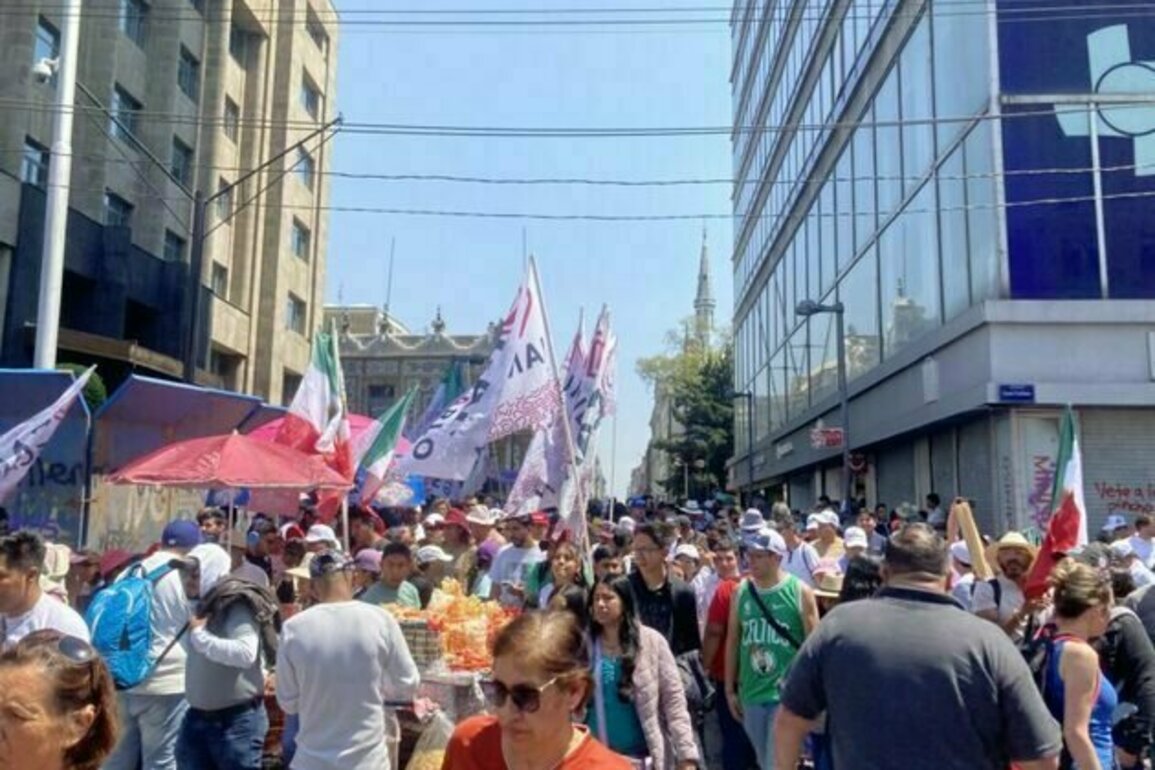
During the press conference, Sheinbaum discussed a Sunday event in Mexico City's large public square celebrating her ability to avoid tariffs for the second time.
Sheinbaum originally planned the event to address the nation with her retaliatory tariff measures. She changed it into a festival featuring live music after Trump reversed his decision following a phone call with Sheinbaum on March 5.
"It demonstrates that the people of Mexico are aware, active, participatory, and that at such an important moment we were even able to reach an agreement through dialog, which is very important, indispensable - the event was good. People were there to defend sovereignty," she said.
Sheinbaum has brought up Mexican sovereignty numerous times when dealing with Trump during the trade conflict. It has not been lost on many of the thousands of her supporters who flooded the square on Sunday.
"She has done an incredible job for the majority of Mexicans facing the tariff situation, which Trump hasn't been able to impose," said Luis Bautista at Sunday's event while holding a Mexican flag painted with the words "Mexico must be respected" on top of it.

Sheinbaum's handling of Trump's hefty approach has been lauded by experts as well.
"While others may see Trump as a kind of folk hero that makes impulsive decisions, I believe that Trump's actions are well calculated and intentional," said Enrique Gutierrez Marquez, director of the Department of Social and Political Sciences at the Universidad Iberoamericana.
"But Sheinbaum doesn't respond right away, and she has managed to reverse Trump's constant threats with political, technical and legal skill in a way we haven't seen before," he said.
Despite the optimism from Sheinbaum's recent triumphs and, according to one poll, an 85% approval rating, some say the trade dispute is far from finished despite potential harms to both Mexican and U.S. economies.
"Sheinbaum is managing extremely well," said Pamela Starr, director of the U.S.-Mexico Network and an international relations professor at the University of Southern California. "But Trump will come up with some explanation for why he wants to use tariffs."
Starr said that Trump is using the tariffs for four reasons: to coerce Mexico, to raise revenues, to rebound the trade deficit, and to bring back U.S. manufacturing.
"But he is unilateral. He doesn't understand the Mexico-U.S. economy - that it is precisely competitive because of trade between the nations," she said. "Sheinbaum will try to limit the damage depending on how high the tariffs are. She'll respond the same way she has been: calmly, not reacting emotionally, and to protect Mexican sovereignty."
Angelica Duran-Martinez, associate professor of political science at the University of Massachusetts-Lowell, also said that Sheinbaum has been able to handle a difficult situation very well. However, her actions on crime may cause more violence within Mexico, further indicating the long-standing power imbalance between the two countries.
"The extradition of the 29 cartel leaders was a huge win for the U.S. and does show some signs of trust," Duran-Martinez said, referring to the historic extradition of cartel leaders to U.S. soil on Feb. 27.
One of the criminals extradited was Rafael Caro Quintero, who now faces charges in the torture and murder of former Drug Enforcement Administration Agent Enrique "Kiki" Camarena in Guadalajara in 1985.
"But it only has a symbolic effect and not a real effect on drug trafficking. It goes after the leaders but not the criminal networks. We have seen that going after only the leaders creates a power vacuum, which can cause more violence within Mexico," Duran-Martinez said, referring to what is known as the "kingpin strategy" - targeting known high-level leaders of criminal organizations and leveraging one against the other.
A recent example of such violence was when Ismael "El Mayo" Zambada was abducted and then arrested by U.S. authorities on July 25 in El Paso, Texas, for his involvement in trafficking fentanyl. Violence broke out between rival groups in Sinaloa in the aftermath of his arrest, which has plagued the state since September.
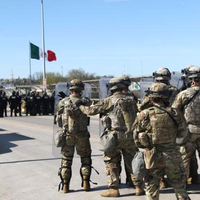
Another aspect of Sheinbaum's security plan in response to Trump's tariffs is troop deployment. On Feb. 5, Sheinbaum began "Operation Frontera Norte," which sent 10,000 Mexican National Guard and Army troops to northern border states.
"Massive troop deployment doesn't have good effects," said Duran-Martinez. "People need to be brought to justice, of course, but the massive deployment of troops without a clear strategy tends to backfire and can also cause more violence."
Duran-Martinez said the symbolic security concessions to the U.S. will not immediately ease decades of law enforcement distrust between the U.S. and Mexico.
"Sheinbaum has been able to appease the U.S. with strong symbolic statements, which have afforded her a little bit of leverage, but the U.S. holds power over Mexico," she said.
Source: Courthouse News Service