

MEXICO CITY (CN) - It all started at a March 29 concert at the Telmex Auditorium in Zapopan, Jalisco.
The concert put Los Alegres del Barranco, a veteran nortena band from Sinaloa, under the scrutiny of multiple criminal investigations and set off legislation in numerous states aiming to ban "narco corridos," or drug ballads, from being played in public.
That night, the band projected images of Nemesio Oseguera Cervantes, or El Mencho, the leader of the Jalisco New Generation Cartel, while they played a song dedicated to him.
With El Mencho's face displayed largely behind them on stage, the band sang its controversial song, "El del Palenque," an homage to the cartel boss. The lyrics describe: "I'm the owner of the palenque / Four letters go in front / I'm from that very Michoacan / Where the Tierra Caliente is / I'm the lord of the roosters / The one from the Jalisco cartel."
The band now faces criminal charges of apologia of violence - music that advocates, glorifies or incites crime and violence.
Though they now deal with themes of overt violence and crime, narco corridos are one of Mexico's most enduring musical forms and first began simply as corridos. The first golden age was during the Mexican Revolution, when musicians wrote songs about revolutionary outlaws.
Using the same narrative techniques, corridos continued to mythologize events and real people seen as heroes in post-revolutionary Mexico. In the 1940s - when Mexican growers started supplying the U.S. with opium during and after World War II - the drug trafficker became the newest incarnation of this outlaw character, and the term narco corrido was born.
"Narco corridos function as a kind of cultural mirror reflecting the complex social realities, economic inequalities and power dynamics of spaces where marginalized communities are forced to navigate their real, daily, lived experiences - as opposed to those of us who are able to consume and analyze and critique this culture from afar," said Christopher Muniz, an assistant professor of writing at the University of Southern California.
"They provide identity markers and performative spaces, provide a framework and narratives. That may be transgressive in nature, yes, but ones that attempt to make sense of the 'madness' of a world that increasingly feels out of our control," he said.
During the 1990s and 2000s, narco corrido singers became victims of the same type of violence they wrote about, and fiction bled into real life.
Chalino Sanchez, who some consider the father of the modern narco corrido, was murdered after playing a show in Culiacan, Sinaloa, on May 16, 1992. Sanchez received a death threat onstage, crumpled up the paper and kept playing. Later that night, he was pulled over by SUVs, and his body was found north of Culiacan, blindfolded and bound, in an irrigation ditch with two bullets to his head.
Valentin Elizalde, another narco corrido singer, was murdered on Nov. 25, 2006. He was shot 20 times in front of fans signing autographs after leaving a performance in Reynosa, Tamaulipas. The most credible motive for the murder was that he sang his song, "A Mis Enemigos," which ridiculed Los Zetas, a powerful drug trafficking organization. He played the song twice that night, once to begin the show and once to end it.
"What they call narco corridos are a reflection of the violence we live. It's someone's experience told in a few exact verses. If the verses become violent, it's because its violence is a reflection of society. If everything is bad, we'll sing about it," said Sinaloan rapper Emmanuel Massu, known as El Enfermo, who integrates narco corridos and narco culture into his work.
"Javier Duarte, the former governor of Veracruz, used thousands of injections for children with cancer, filled with water. How could it be more violent? A composer is only recounting what he experiences. But the problem for Sinaloa composers is that all we see is violence and blood, and we have to talk about that. Show me a better world and we'll sing about that," Massu said, referring to 2017 claims against former Veracruz Governor Javier Duarte that he ordered fake medications for child cancer patients, who were given distilled water instead of chemotherapy.
To Massu, narco corridos don't exist in a vacuum. Narco culture is a symptom of a failed political system.
"The only one the system sees as guilty is the poor person. Why do certain people mind corridos so much? Because no one likes it when a poor person makes a living, much less someone telling someone else that that a poor person bettered themselves or is doing better than them," Massu said.
Legal actions and 'cognitive dissonance'
The Mexican government wasn't alone in penalizing Los Alegres del Barranco's concert display. U.S. President Donald Trump's administration revoked the members' visas for spreading images of the leader of the Jalisco New Generation Cartel.
"I'm a firm believer in freedom of expression, but that doesn't mean that expression should be free of consequences," said Deputy Secretary Christopher Landau via X, formerly known as Twitter, on canceling the band's visas. The band's U.S. tour - which would have started April 4 in Tulsa, Oklahoma - was canceled.
On May 12, Control Judge Gildardo Joel Landeros Parra formally charged the band with apologia of violence, a violation of Article 142 of the Jalisco Criminal Code.
Parra fined the four members of the band - Armando Moreno Alvarez, Jose Pavel Moreno Serrano, Jose Carlos Moreno Alvarez and Cristobal Reyes Lopez - and their promoter, $93,000. They also have to sign in to court every week and are not allowed to leave Jalisco unless playing concerts.
Pavel Moreno, the band leader, said on May 11 that it was the promoter's idea - not the band's - to project El Mencho. He said that the band didn't agree with the projections.
These precautionary measures will last for three months, until the Jalisco State Prosecutor's Office completes other investigations stemming from three of the band's concerts between April and May.
On the same day, Alfredo Ramirez Bedolla, the governor of the western Mexican state of Michoacan, announced during a press conference his intent to introduce a new law to make playing and performing music considered advocating and glorifying crime illegal.
"There will be no narco corridos in any public show in Michoacan," Bedolla said.
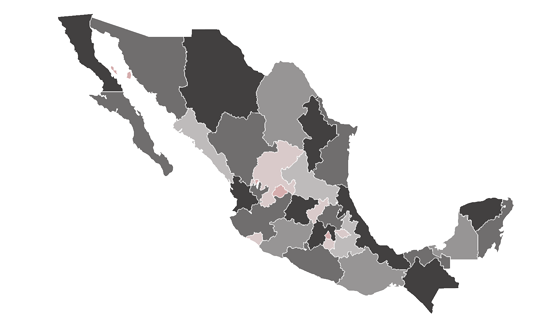
The law would make Michoacan the 10th state with similar laws on the books, though there are no federal laws prohibiting playing music that is considered an apologia of violence.
On April 17, Bedolla issued a decree that banned playing narco corridos in the state, but that was overturned by a federal judge.
Juan Carlos Ramirez-Pimienta, a professor of Spanish and Portuguese languages and literatures at San Diego State University, said the economic and cultural shift that began in Mexico in the 1980s has led to the popularity of the genre.
"That's when the ethical moral compass starts to fluctuate. That's when I believe we got our current notion of narco culture. That's when the 'jefe' came about, and it's very associated with economics. Whoever is able to employ people is a hero in an impoverished country," said Ramirez-Pimienta.
The current global popularity of narco corridos is due to many other factors than just their criminal element, he said.
"There are simultaneously many different things. The link to the criminal element does not sufficiently explain the phenomena. It is useful and it explains a portion of it, but not in its entirety. And it is a mistake to overemphasize this link between what people actually do when listening to the songs. They go through this, what the social psychologists call cognitive dissonance. They're able to see that, okay, the message might be wrong, but I'm going to adapt the message of social mobility in my own way," Ramirez-Pimienta said.
On Friday, April 11, Sinaloan singer Luis R. Conriquez took the stage at the Feria del Caballo Texcoco in the State of Mexico. The night quickly descended into chaos when he refused to sing his popular take on narco corridos called corridos belicos.
Viral videos of the event show spectators screaming and throwing objects onto the stage. Eventually, some concertgoers jumped down into the stage, smashing the band's musical equipment. Fights broke out, and the band was forced to flee for safety.
Hours before the show, Conriquez warned his audience he would no longer play corridos.
"There are many people who don't understand. They think that we make the rules, but the truth is that you will not see corridos in the events from now on," he posted on Facebook.
During her April 14 press conference, Mexican President Claudia Sheinbaum condemned the violence at the Feria del Caballo Texcoco. She also stated that a ban on any genre of music would be absurd and instead urged for social awareness and called for the promotion of other types of music.
A statement made by the Mexican leftist party, Movimiento Antorchista, pushed the debate a step further.
Andi Uriel Hernandez Sanchez, the Veracruz spokesperson for the party, wrote that narco corridos broke with the history of the corridos popular musical form in the 2000s and exist in their current form as a result of entertainment company propaganda.
"The apologists of the 'subgenre' emphasize that the Mexican corridos have always had a 'hard' and 'subversive' content and that, as creations of the people, they have served to exalt the popular heroes who, on many occasions, turned out to be 'bandits', 'smugglers' or 'disturbers of the social order.' There are even those who venture to point out that their existence is due to the violent, sexist and bullish nature of Mexicans. Pure nonsense!" the statement said.
On April 16, the Aguascalientes Congress approved a ban on narco corridos days before the major National San Marcos Fair, featuring multiple artists known for their takes on the genre.
Popular corridos tumbados singer Natanael Cano, took the stage on May 4. Early on, he played "Pacas De Billetes" which alludes to famed Sinaloan drug trafficker El Chapo. Later, the mic was cut off and he gave a message on the ban before having to leave the stage.
"They forbid us to sing and show our art, but in the end, we don't give a fuck," he said.
Days later at the fair, Junior H, another popular corridos tumbados singer, started singing one of his well-known narco corridos, "El Hijo Mayor." The song is sung from the first-person perspective of the son of El Chapo. Seconds into the song, the singer's mic was cut, though the crowd joined him in singing the lyrics before he left the stage.
In a Monday press conference, Los Alegres del Barranco confirmed their concert for May 24 in Tuxpan, Jalisco.
"Since all this happened, the crowd turnout, the numbers of social media followers, the numbers of listeners have increased quite a bit. And also the truth is, thank God, the phone doesn't stop ringing asking for tour dates," said Pavel Moreno.
Source: Courthouse News Service