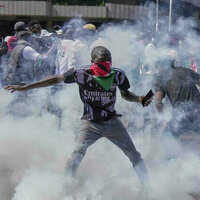


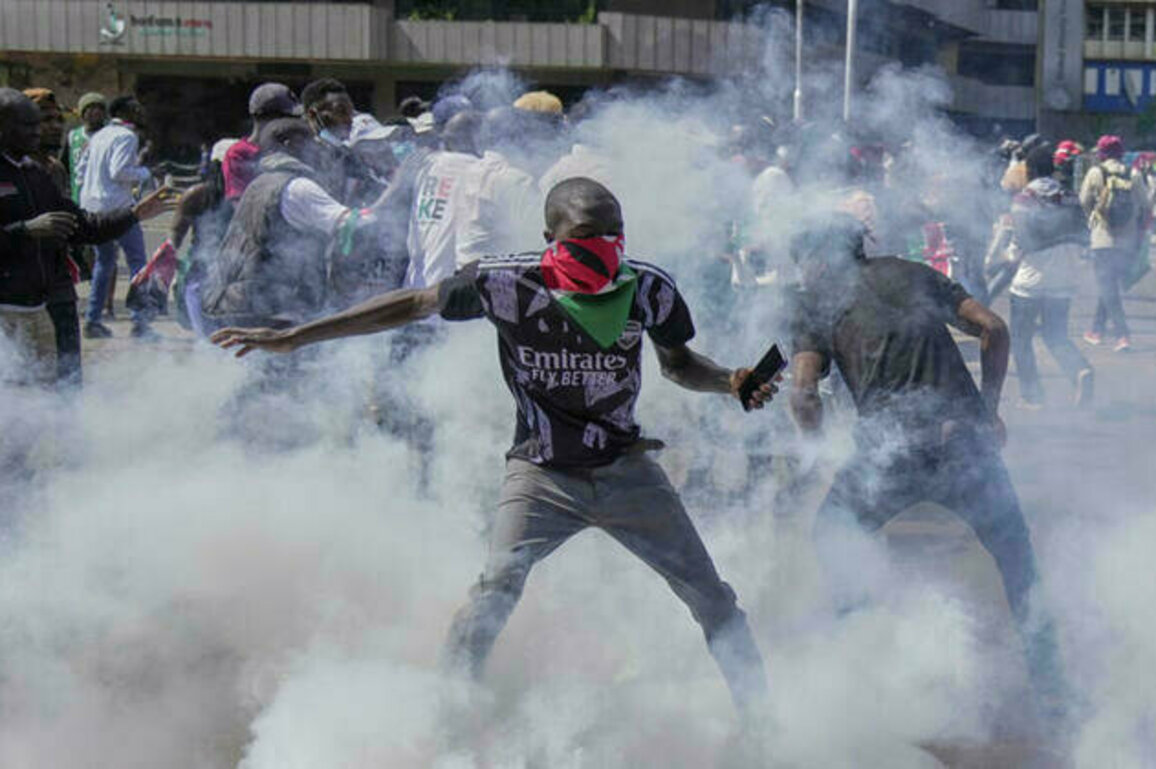
At least eight people died Wednesday in a fresh wave of anti-government protests that have swept across Kenya in the wake of the unexplained death of a popular blogger in police custody, the national rights watchdog said. The demonstrations also coincide with the one-year anniversary of last year's mass protests against President William Ruto's proposed tax hikes.
At least eight people died innationwide anti-government protestsinKenyaon Wednesday, the Kenya National Commission on Human Rights said in a statement.
Another 400 people were injured during the demonstrations, the national rights watchdog said, including protesters, police personnel and journalists. Some had gunshot wounds, it added.
Youth-led protests againstpolice brutalityand poor governance have erupted across Kenya again, with thousands making their way to the central business district in the capital, Nairobi.
The protests, which coincided with the first anniversary ofdemonstrations opposing tax hikesthat left 60 people dead and 20 others missing, followed last week's rallies that demanded answers for the unexplained death of a Kenyan blogger while in police custody.
Read moreKenya's deputy police chief steps aside as blogger's death investigated
Frustration is growing, especially among Generation Z, over police violence, economic struggles, and government mismanagement.
The Communications Authority of Kenya has directed local media to stop all live broadcasts of the protests halfway through the day as PresidentWilliam Rutowarned that violence wouldnt be tolerated.
Many turned to social media to share updates and remember slain protesters. Others posted anti-government messages and memes. On the streets, some could be seen offering protesters water.
'Too many Kenyans are losing their lives'
Calls for accountability have grown louder in Kenya after a street hawker was killed during last week's protests. A Kenyan court has given detectives 15 days to complete investigations into two police officers suspected of the shooting.
This came as young people flooded social media platforms throughout the week with commemorations of protesters killed last year. At the time, Ruto apologised and vowed to end police brutality as the top police chief resigned.
Not a single officer has been held to account, said Hussein Khaled, a human rights activist, adding that people took to the streets to demand justice in terms of compensation ... arrest of those officers who were involved ... police reforms because too many Kenyans are losing their lives to police brutality.
Last years deadly protests strongly opposed a finance bill that raisedtaxessignificantly to address debt, putting an undue burden on young, educated people struggling withunemploymentand a rising cost of living. Ruto later scrapped the bill.
Some tax proposals were reintroduced later, drawing widespread criticism and calls for Ruto's resignation, following the appointment of a new but widely criticised cabinet. A revamped healthcare levy also changed standard premiums to a progressive tax, based on income.
United Nations' data shows that 70 percent of sub-Saharan Africa is under the age of 30, with 67 percent of Kenya's young people unemployed.
Both the health and the education sectors, which greatly affect the youth, are seemingly sinking due to misguided policies and failure to provide needed resources. At the same time, there appears to be unlimited funds for aristocratic luxuries, said Macharia Munene, professor of history and international relations at United States International University Africa in Nairobi, referring to some state peoples spending that has been strongly condemned.
Ruto has been accused of misappropriating taxpayer money on lavish trips, most notably the use of a private jet on his trip to the United States right before last years protests. He apologised and dismissed ministers accused of incompetence,corruptionand displays of opulence amid complaints about the high cost of living.
Meanwhile, Kenya's opposition received its share of criticism, with many saying it avoided challenging the status quo after some of its members were appointed in Ruto's new cabinet
Enough is enough ... We are here for change, it is time for us to get our nation (back), said protestor Sevelina Mwihaki. The blood that we have shed is enough."
(FRANCE 24 with AP and Reuters)
Originally published on France24