

MEXICO CITY (CN) - In her morning press conference Friday, Mexican President Claudia Sheinbaum responded to what she considers a would-be U.S. invasion after The New York Times reported unnamed sources' claims that U.S. President Donald Trump signed a secret Pentagon directive authorizing military force against certain cartels in Mexico and Latin America.
"The United States is not going to come to Mexico with the military; we cooperate, we collaborate, but there will be no invasion - that is ruled out, absolutely ruled out," said Sheinbaum. "In addition - which is what we have expressed in all the calls - it is not allowed, nor is it part of any agreement."
Ilan Katz, Mexico City-based criminal defense attorney and president of the Mexican Bar Foundation, is deeply concerned about the reported directive.
"The notion of having U.S. military activity in Mexico in violation of its sovereignty to go after cartels is unprecedented," Katz said in a statement to Courthouse News. "This violation of Mexican sovereignty would disrupt cooperation between the two countries at a time when we are seeing great results in anti-trafficking enforcement on this side of the border in Mexico. This would be a violation of international law and most probably U.S. law as well, and would set a terrible precedent for U.S. involvement in Latin America."
Benjamin Smith, a Latin American history professor at the University of Warwick and author of "The Dope: The Real History of the Mexican Drug Trade," said U.S. military involvement on Mexican soil would be a logistical nightmare for the U.S. and could present multiple disastrous scenarios.
"My concern is where does the [U.S. government] get any of this intel from?" Smith said. "So they're getting the intel basically, let's be frank, from other drug dealers. That's what the DEA does. That's what the FBI does. You turn some drug dealers against other drug dealers. ... In terms of stopping fentanyl, which is what they're really going to be targeting - pill factories and tiny little fentanyl labs are minute; it's not like going up into the hills and spraying pesticides and herbicides over fields of opium."
Smith said another scenario would be for the U.S. military to intervene in the Mexican ports where fentanyl precursors are shipped into. These ports are controlled by the Mexican Army, creating an armed conflict between the two neighboring countries.
He also warned of the violence that occurs when a cartel member is taken out.
"These kind of takeouts of cartel members take a lot of innocents with them," Smith said. "Do they want to put that on the U.S. Army?"
'PR game'
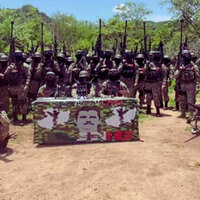
Two high-profile media reports were published Thursday, one in the U.S. that mentioned U.S. military intervention in Mexico and another in Mexico that discussed U.S. military corruption.
A Rolling Stone article reported on Trump's willingness to intervene in Mexican territory, from "sending in special-ops soldiers to assassinate cartel leaders to using drones or other military aircraft to conduct air strikes on cartel infrastructure and drug labs."
Another article by well-known Mexican journalist Juan Velediaz analyzed the murder of two U.S. Special Forces soldiers on Dec. 2, 2020. The two, stated Velediaz, had become disillusioned with the Army and established a drug trafficking network with Mexican criminal organization Las Zetas and were planning on writing a book about the involvement of organized crime in the U.S. Special Forces.
No one has been charged with the crime.
"The one reason the military never ever wants to get involved in drug stuff is because it knows it corrupts you," Smith said. "It rots any institution that has to challenge it because basically you are, you get given life-changing amounts of money simply not to do anything, to look the other way, to ignore something, to do something that's basically untraceable. And, the military knows this; they've always been reluctant to get involved."
Smith said the timing of the most recent articles published Thursday concerning U.S. military intervention and corruption could be a coincidence, though he added that "the drug war is a PR game beyond everything."
On Feb. 20, Trump designated certain Mexican cartels as terrorist groups, and his government went after the Mexican government for its perceived "intolerable alliance" with certain criminal groups as a pretext for tariffs and heightened border security.
On June 26, Trump's government sanctioned multiple Mexican banks for their involvement with criminal groups, a claim Sheinbaum called unsubstantiated.
Source: Courthouse News Service