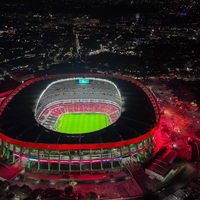


MEXICO CITY (CN) - Calzada de Tlalpan stretches from Mexico City's historic center south to Estadio Banorte, formerly and still lovingly known as Estadio Azteca, which has been under renovation since May 2024 for the FIFA World Cup. The inaugural match will take place there on June 11.
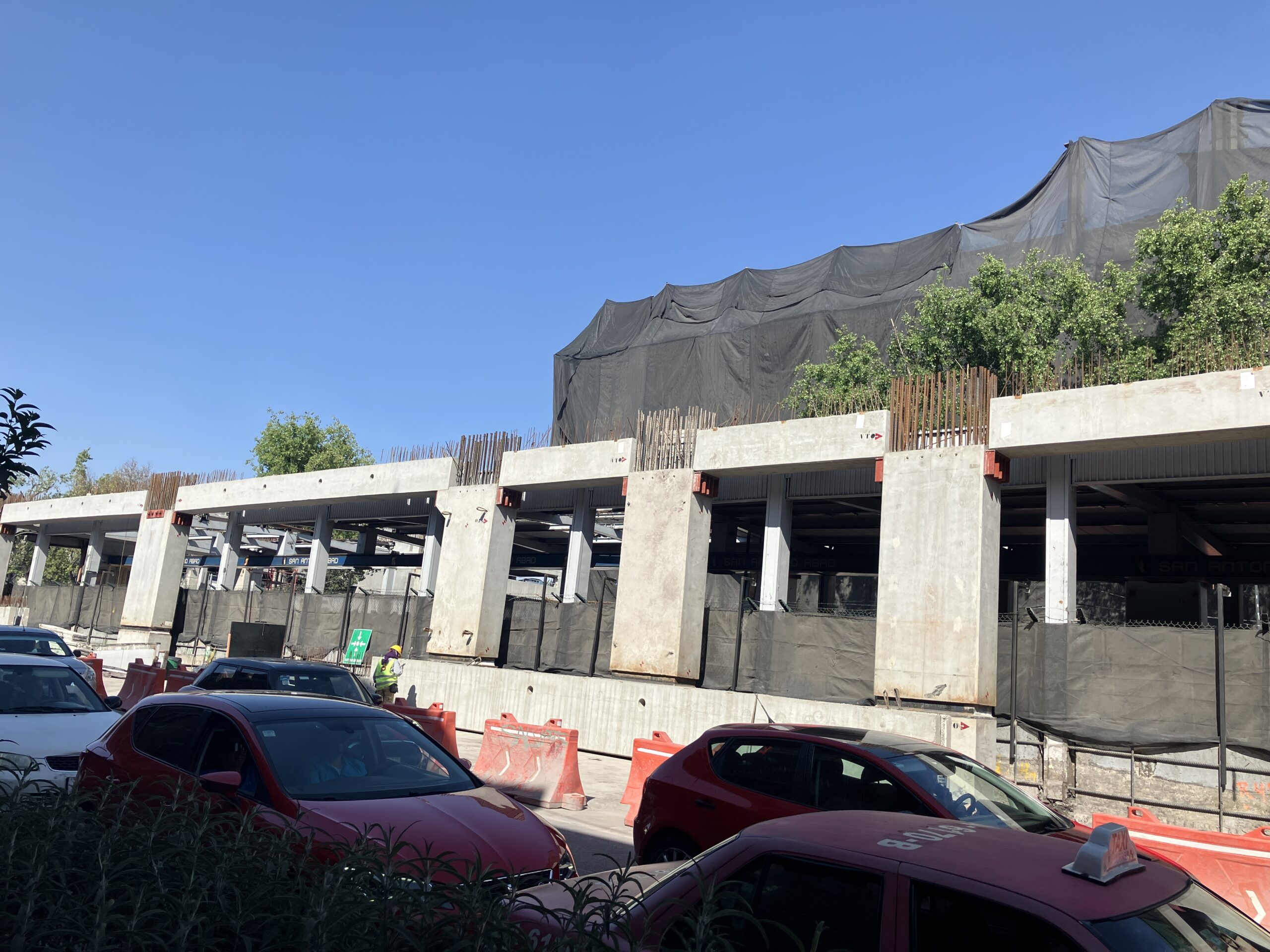
On a typical weekday afternoon, the avenue is usually choked with cars, buses, trucks and any other vehicle under the sun. The Mexico City metro's blue line traverses the avenue's path when it peaks above ground at the San Antonio Abad station, which has been closed since March 17, along with its two neighboring stations to the south.
Mexico City Mayor Clara Brugada announced on Oct. 5, 2024, her plan to transform Calzada de Tlalpan with major construction projects, including an elevated walkway above the blue line and a bike lane running towards the stadium. Construction began a year later and is still going.
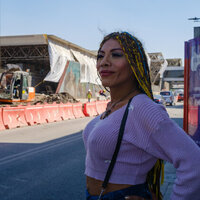
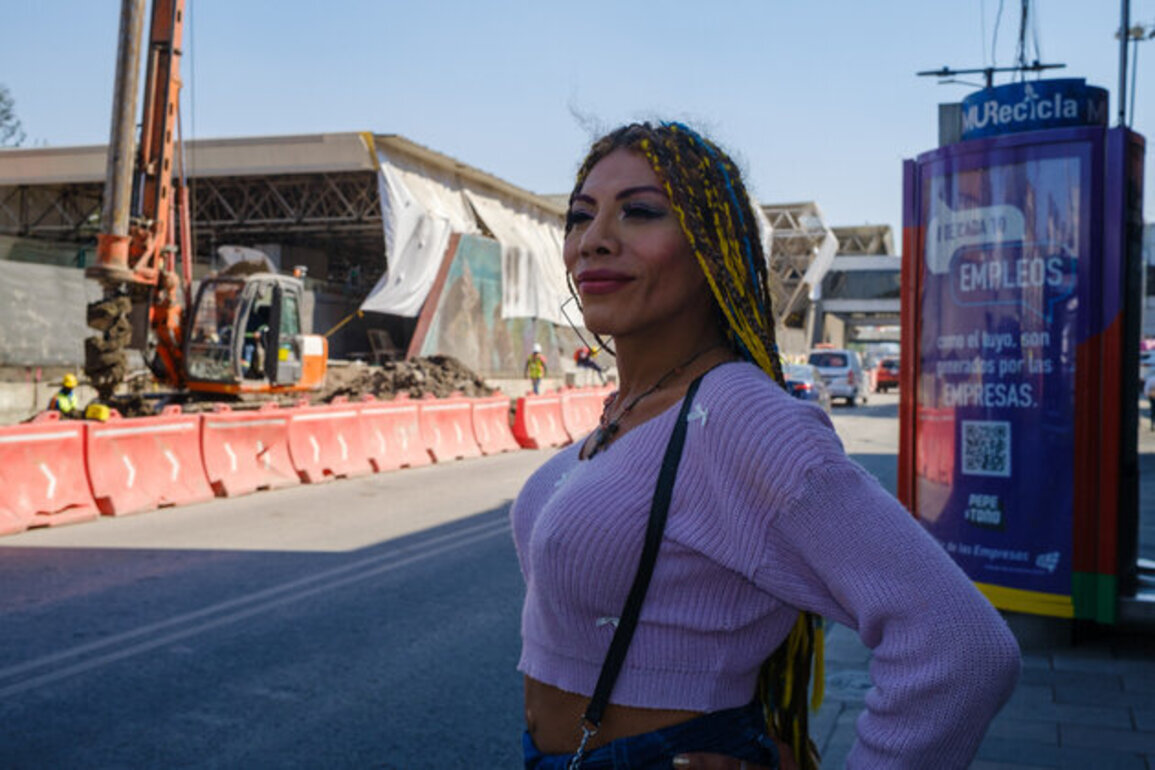
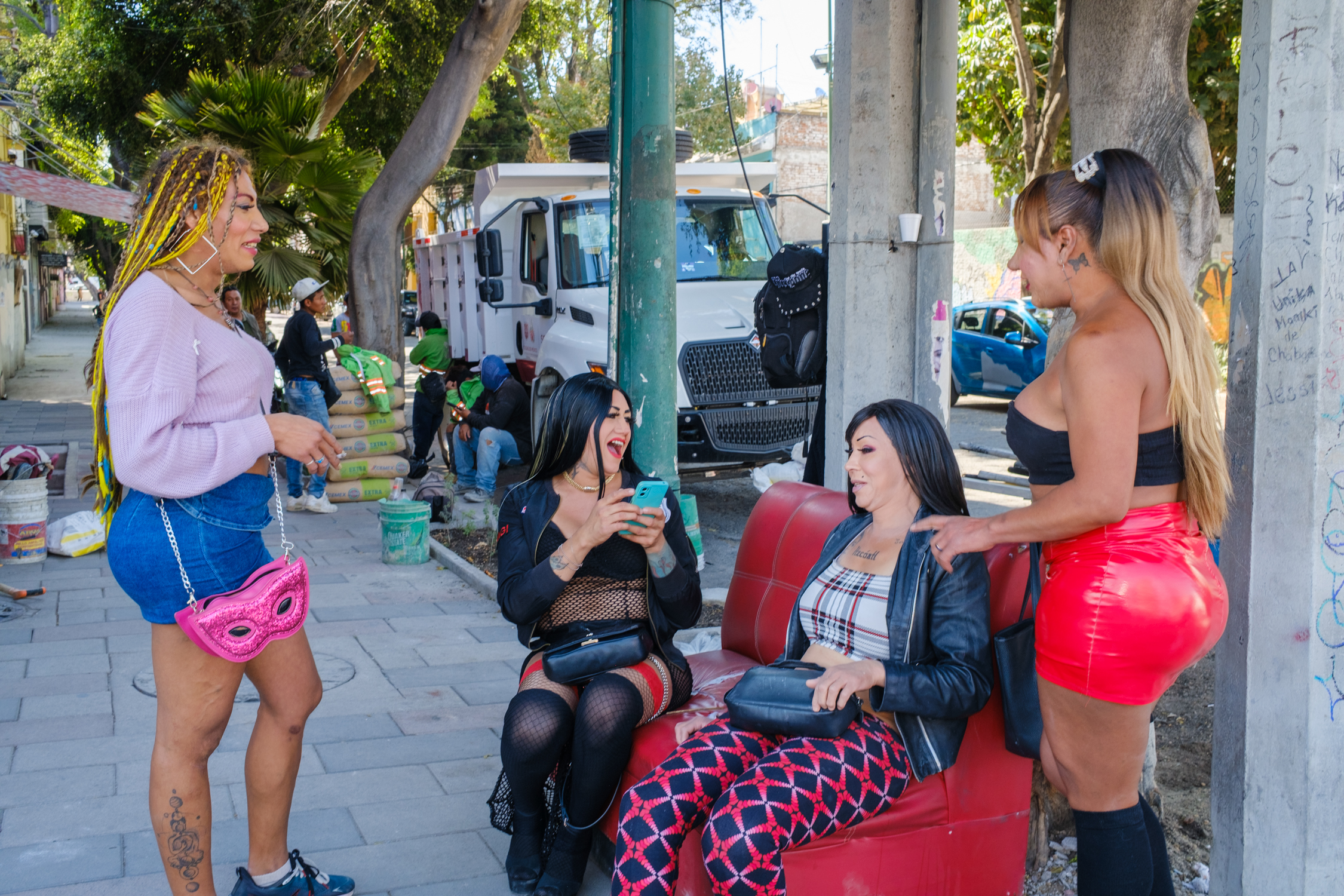
Amidst the avenue's chaos, shiny modern hotels sit right up against colonial houses, convenience stores and pharmacies. Karolina Longtaim and four other sex workers stand on the street or sit on a small red couch outside an hourly hotel near Metro San Antonio Abad, chatting to each other and laughing as cars and people go by. This scene has been like this for decades, but now heavy machinery digs up the street across from them to make way for new construction, threatening their peace and livelihoods.
Longtaim has been a sex worker on the avenue for years and is the president of Trans Sweet Collective. She says the government has not been listening to her or her colleagues' concerns that the World Cup construction amounts to an erasure of her profession and of working people in the area in general.
Sex workers have marched multiple times, closing off Calzada de Tlalpan in order to air their grievances with the construction and its effect on their earnings. Another march is planned for March 31.
"The floating walkway was a surprise project for the World Cup, but no census was conducted to ask the public whether we agreed or disagreed. With a project that will be funded by Mexican taxpayers, we are denouncing and exposing that these unviable projects have negatively impacted not only working Mexican people and their finances, but also self-employed workers such as sex workers," Longtaim said.
Sex work is legal on a federal level in Mexico and regulated on a local and state level. Though it is not strictly regulated in Mexico City, it is decriminalized, meaning neither sex workers nor clients face legal penalties for engaging in the activity.
Longtaim said the floating walkway and the bike lane have worsened an already nightmarish traffic situation, making it even more difficult for potential clients to see her and impacting her income - a complaint echoed by her colleagues.
"Only the elite, the rich and middle classes are being considered. Those who have been displaced from independent work, especially sex workers, are not being taken into account. Their livelihoods have been severely impacted, and we have been forced to work 24 hours, seven days a week to feed our families," she said.
The administration of the head of government of Mexico City did not respond to requests for comment.
Another obstacle forced onto sex workers? With the predicted influx of mass tourism, hotels in the area have already raised their prices by more than 150%.
For sex workers who live and work in hotels or small apartments, the situation has become untenable.
"What we, as sex workers, are looking for is decent housing, for the government to give us access to social projects and programs, and instead of where the government is focusing its attention for the World Cup, they could have fixed neighborhoods and streets for the people of Mexico. All that money they are spending on unviable projects would have been better off given to the working people of Mexico so the working people of Mexico could be happy and we could welcome the millions of people who will be watching the World Cup," said Longtaim.
This month, sex workers in the city filed a formal complaint to the Mexico City Commission of Human Rights, highlighting these issues.
"We are now exposing the Mexican government's complete disregard for sex workers, and from the head of power, they have tried to offer us a sum of money that is not enough to support our families. How can they forget that we have been a historical part of this area for over 100 years? We have practiced sex work here, and it is unacceptable that a project meant to showcase Mexico to the world should expose the fact that it has plunged the country into poverty and misery," said Longtaim.

Chiquis Rivera, who sat on the small red couch outside the hotel, has also been working in the area for years.
"Before the construction, we all worked well, we were doing well. We had our clients, cars could stop, people could pass by more freely. Now, well, it's more difficult to work, and access, coming and going, is complicated. It's become far from being a benefit," Rivera said.
She highlighted some of the more personal, psychological distress brought on by the situation.
"At first, it was a significant problem, both professionally, financially and psychologically, because you're staying at the hotel and you don't get any rest. There's noise, the noise is constant, it's 24 hours a day. There's pollution, there's dust, there's dirt, and there are a lot of workers always just watching us," Rivera said, pointing to workers. "Tell me, look, how am I supposed to work with 20 people just watching me like that? And the clients aren't going to come because of the mistrust."
She pointed to construction across the street: tractors, bulldozers, jackhammers and unfinished concrete slabs.
"They haven't finished those streets in two or three months. I mean, they haven't made any progress. I mean, they've stopped there. Imagine if they haven't made any progress in two or three months, how much progress are they going to make? It could also be a risky project because the World Cup is coming up, and rushing it could lead to problems," said Rivera.
The city government claims the construction should be finished by May.
"So, being fair, I mean, let's hope this helps us and benefits us even after the World Cup, right? But meanwhile, the truth is, we are suffering through this," she said.
Tania Hernandez has also been working in this area for years. And perhaps even bigger than finances, she noted that working people like her are the living history of the area.
"I've been here for many, many years. I've seen a lot of things happen, and honestly, what's happening right now is very different from anything that's happened before," she said.
She said sex workers like her are not separate from the city the government wants to transform, but part of it and record-keepers of its tragedies.
She recalled when an earthquake-damaged building collapsed nearby, killing four people. She told of deaths on the metro and problems inside the packed hotels where she works, problems she says will only get worse the less attention the government pays to them in favor of mega projects such as this one.
But it's not all tragedy and despair.
"We've been here a long time. We are here all day, every day. We sleep where we sleep, and then come here. The neighbors know us, nobody wishes us ill, everyone says hi to us and asks us how we are doing. We tell them we are standing firm. This is our home. We're living together here as a family, the family we chose, not the one we were born into," Hernandez said.
Source: Courthouse News Service