

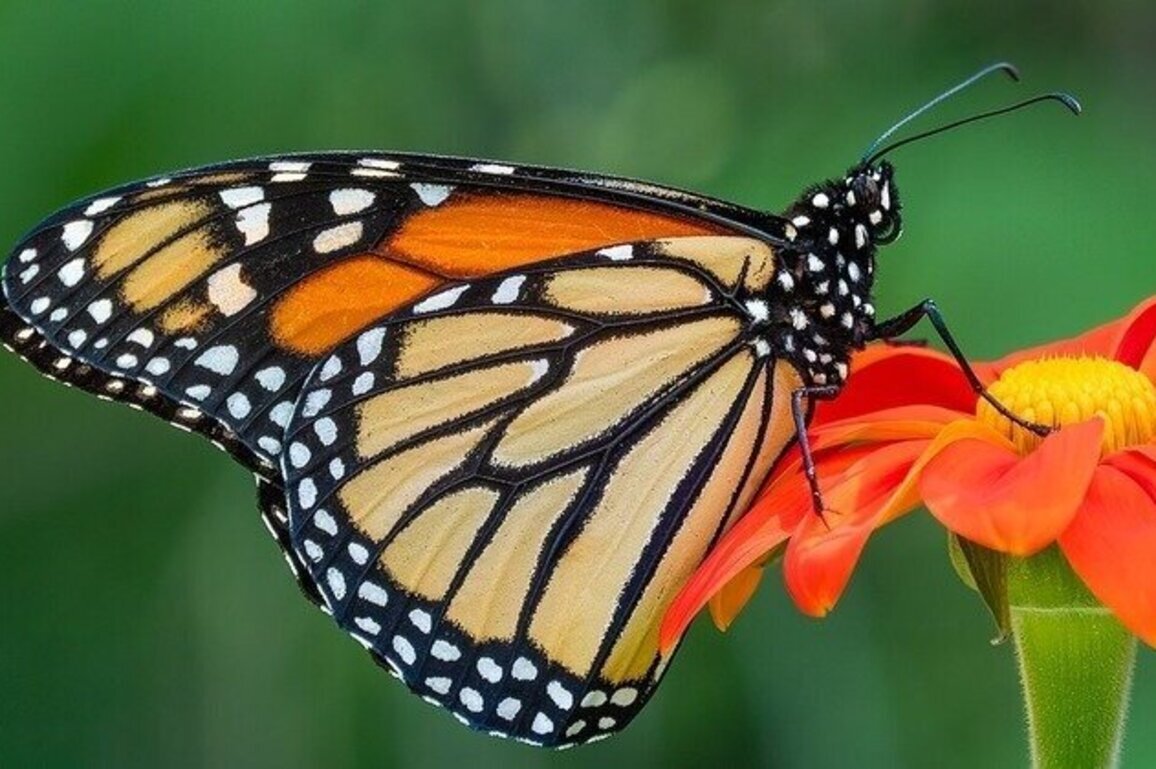
Monarch butterfly populations saw a large uptick in population in 2025, a second year of growth since a near-record low and experts are calling on people to support the species by planting more habitat.
Each year, scientists in Mexico measure the number of acres monarch butterflies occupy. Last year, monarchs lived through the winter season on more than seven acres of land, up from just 4.4 acres the year before.
Kristen Baum, director of the nonprofit Monarch Watch, urged caution, though. Few monarch eggs actually mature to adulthood, so populations can fluctuate greatly depending on if the monarchs happen to have a good survival rate.
"If you have a year where just a few more make it, then you can see drastic increases in the population," Baum explained. "If you have the reverse, a few less make it, then you can see big declines. So you have big fluctuations."
This is the second year of population growth for the monarch after registering its second-lowest population numbers in 2023. Since the 1980s, monarch butterfly populations have declined by more than 80%. Monarch butterflies weigh less than a paper clip and can travel more than 3,000 miles during their migration.
Baum emphasized the need for more waystations to feed and shelter monarchs, even on balconies of small apartments. It is important waystations have native plants to nourish them, and as their only food source, milkweed plants are essential to supporting monarch caterpillars.
"Getting habitat out there on the ground is a big one," Baum stressed. "Every little bit helps, even if you just live in an apartment and have a pot of some nice fall flowering Asters, on your patio. You might get some visitation as well."
There are more than 1,400 registered waystations in Maryland alone.
Source: Public News Service